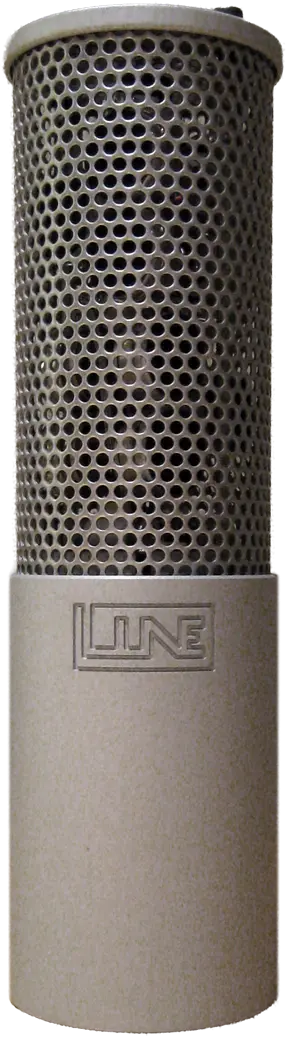
La deuxième séance de l’atelier OBORO : un récital d’orgue enregistré avec un SoundField ST350 et un Line Audio QM12i.The second OBORO workshop session: an organ recital recorded with a SoundField ST350 and a Line Audio QM12i.
EnregistréRecorded
12 octobre 2008Atelier OBORO, octobre 2008October 12, 2008OBORO workshop, October 2008
LieuVenue
Grand Séminaire de MontréalChapelleChapel
InterprètePerformer
Yves-G. Préfontaine, orgueYves-G. Préfontaine, organ
Format
24 bits · 48 kHz6 fichiers FLAC · deux extraits et le récital complet par microphone24 bit · 48 kHz6 FLAC files · two excerpts and the complete recital per microphone
Comme en octobre 2007, l’atelier d’OBORO visait à offrir aux participants un survol historique et théorique du son ambisonique, ainsi qu’une démonstration des outils matériels et logiciels de production utilisables en Ambisonie. Dès ses débuts, l’Ambisonie a toujours été une technologie inclusive : même si le microphone SoundField est souvent perçu comme « le seul microphone ambisonique », n’importe quel signal audio peut être encodé en format-B. À la fin des années soixante-dix, le microphone quadriphonique Neumann QM69 était prévu comme source de format-B, une fois son signal quadriphonique converti. Le QM69 n’est plus fabriqué depuis longtemps, mais deux fabricants suédois, Pearl et Line Audio Design, proposent aujourd’hui un modèle de microphone quadriphonique. Pour l’enregistrement du 12 octobre, nous avons pu essayer le Line Audio QM12i aux côtés d’un SoundField ST350.Like in October 2007, the OBORO workshop was aimed at giving participants a historical and theoretical overview of Ambisonic surround sound and a demonstration of the hardware and software production tools that can be used for Ambisonics. From its inception, Ambisonics was always an inclusive technology and although the SoundField microphone is often viewed as “the only Ambisonic microphone”, any audio signal can be encoded to Ambisonic B-Format. Back in the late seventies, the Neumann QM69 quad microphone was planned as a source of B-Format, once its quadraphonic signal was converted. The QM69 hasn’t been in production for a long time, but nowadays Swedish microphone manufacturers Pearl and Line Audio Design are both offering a quad mic model. For the October 12 recording, we had the opportunity to try out the Line Audio QM12i along with a SoundField ST350.
Line Audio QM12i
Deux dispositifs principauxTwo main pickups
Les microphonesThe microphones
Le microphone Line Audio QM12i coûte environ 1000 $ et le SoundField ST350 environ 8000 $.The Line Audio QM12i microphone is around $1000 and the SoundField ST350 is around $8000.
Line Audio QM12i
Microphone quadriphoniqueQuadraphonic microphone
Capsules
Quatre éléments cardioïdes disposés à 90° les uns des autres pour couvrir uniformément un champ horizontal de 360°. Fait intéressant, chaque élément cardioïde du QM12i est en réalité formé de trois capsules plus petites.
Enregistreur
Quatre câbles niveau micro vers deux Metric Halo ULN-2
Sur le pied
En haut, environ 10 cm devant le pied
Capsules
Four cardioid elements arranged at 90° from each other to uniformly cover a 360° horizontal field. It’s interesting to note that each cardioid element in the QM12i is in fact made up of three smaller capsules.
Recorder
Four mic-level cables into two Metric Halo ULN-2
On the stand
On top, about 10 cm in front of the stand
≈ 1000 $≈ $1000
SoundField ST350
Réseau tétraédrique, du format-A au format-BTetrahedral array, A-Format to B-Format
Capsules
Quatre capsules cardioïdes montées en tétraèdre produisent un flux audio appelé format-A : il faut le boîtier de contrôle SoundField pour convertir ce flux en format-B.
Enregistreur
Quatre câbles niveau ligne vers une RME Fireface 400
Sur le pied
Sous le QM12i, environ 15 cm devant le pied
Capsules
Four cardioid capsules mounted as a tetrahedron producing an audio stream called A-Format: the SoundField control unit must be used to convert the stream to B-Format.
Recorder
Four line-level cables into an RME Fireface 400
On the stand
Under the QM12i, about 15 cm in front of the stand
≈ 8000 $≈ $8000
Double MS
Ajout au dispositif principal, sur un second piedAdd-on to the main setup, on a second stand
Comme on le voit sur les photos ci-dessous, nous avions aussi installé un microphone-enregistreur périphonique Zoom H2, mais des problèmes de formatage de dernière minute l’ont amené à enregistrer le récital avec des réglages différents de ceux du système principal. Nous n’utiliserons donc pas ce résultat ici : consultez le compte rendu de 2007 pour les performances du Zoom H2 dans des conditions semblables.As it can be seen from the following pictures, we also installed a Zoom H2 surround microphone/recorder, but last minute formatting problems meant that it recorded the recital at different settings than the main recording device. We will not use the result for this review then: read the 2007 report for the Zoom H2 performance in similar conditions.
Le Line Audio QM12i est installé au sommet du pied de microphone, environ 10 cm devant celui-ci. Ses quatre câbles niveau micro sont reliés à deux interfaces audio Metric Halo ULN-2. Le ST350 est sous le QM12i, environ 15 cm devant le pied. Les quatre câbles niveau ligne sortant du boîtier de contrôle du ST350 sont reliés à une interface audio RME Fireface 400.The Line Audio QM12i is installed on top the mic stand and about 10 cm in front of it. The four mic-level cables from the QM12i are connected to two Metric Halo ULN-2 audio interfaces. The ST350 is under the QM12i and about 15 cm in front of the mic stand. The four line-level cables out of the ST350 control unit are connected to a RME Fireface 400 audio interface.
Les interfaces Metric Halo et RME sont reliées à un Apple MacBook Pro 2,4 GHz sous macOS 10.5.5, avec la station audionumérique Steinberg Nuendo 4.2.2. Les interfaces partagent le même wordclock et sont regroupées grâce à la fonction périphérique audio agrégé de macOS, pour ne présenter qu’une seule interface au logiciel d’enregistrement. L’enregistrement se fait en 24 bits et 48 kHz.The Metric Halo and RME audio interfaces are connected to an Apple MacBook Pro 2.4 GHz running macOS 10.5.5 and Steinberg Nuendo 4.2.2 DAW. The audio interfaces share the same wordclock and are grouped with the Mac macOS Aggregate Audio Device feature to present only one audio interface to the recording software. The recording is done at 24 bit and 48 kHz.
FLAC · 24 bits24 bit · 48 kHz
Écouter et téléchargerListen & download
Deux extraits et le récital complet, chacun enregistré par les deux microphones.Two excerpts and the complete recital, each recorded by both microphones.
Pour écouter et éditer les fichiers audio FLAC, nous recommandons ocenaudio, un éditeur audio, ou REAPER, une station audionumérique.We recommend either ocenaudio, an audio editor, or REAPER, a digital audio workstation, to playback and edit the FLAC audio files.
Vous pouvez aussi convertir les fichiers FLAC dans d’autres formats avec XLD (macOS seulement).You can also convert the FLAC files to other formats by using XLD (macOS only).
Photos des participants à l’atelierPhotos by the workshop participants
Journal photoPhoto journal
De la salle de l’atelier chez OBORO à l’enregistrement dans la chapelle. Sélectionnez une photo pour l’agrandir.From the workshop room at OBORO to the recording in the chapel. Select a photo to enlarge it.
01
L’atelier chez OBOROThe workshop at OBORO
La régie périphonique d’OBOROLes moniteurs Dynaudio Air 20 sont disposés selon la configuration 5.1 habituelle : gauche/droite à 30° et Ls/Rs à 110°. À l’écran, une photo du prototype de microphone SoundField de 1976, présenté par Michael Gerzon lui-même. La photo provient du site Michael Gerzon Photos.OBORO’s surround sound control roomDynaudio Air 20 monitors are positioned in typical 5.1 fashion with left/right at 30° and Ls/Rs at 110°. On screen is a picture of the 1976 prototype SoundField microphone revealed by Michael Gerzon himself. The picture is from the Michael Gerzon Photos website.L’écran de la régie d’OBORO avec Apple GrapherDans la régie périphonique d’OBORO, Apple Grapher à l’écran. Il sert, pendant l’atelier, à montrer la conception des microphones virtuels.OBORO’s control room screen showing Apple GrapherIn OBORO’s surround sound control room, on screen is Apple Grapher. It’s used in the workshop to demonstrate the design of virtual microphones.L’écran de la régie d’OBORO avec Plogue BiduleEncore l’écran avant, cette fois avec l’environnement modulaire de flux de données audio Plogue Bidule.OBORO’s control room screen showing Plogue BiduleThe front screen again, but with the modular data flow environment for audio of Plogue Bidule.
02
Vérification du matérielChecking the gear
Vérification du matériel d’enregistrement dans le studio 1 d’OBOROLe Line Audio QM12i est installé au sommet du pied de microphone, avec le ST350 en dessous.In OBORO’s Studio 1, checking the recording the gear.The Line Audio QM12i is installed on top the mic stand, with the ST350 under it.L’assemblage Double MSEn complément du dispositif principal, un assemblage Double MS sera aussi installé. Il sera enregistré sur un Aaton Cantar-X.The Double MS assemblyAs an add-on to the main recording setup, a Double MS assembly will also be installed. The Double MS will be recorded on a Aaton Cantar-X.Le Line Audio QM12i sans sa grilleChaque groupe de trois capsules forme un élément cardioïde.Microphone Line Audio QM12i prêté par Etienne Bovo.The Line Audio QM12i with its grille removed.Each capsule triplet make a cardioid element.Line Audio QM12i microphone courtesy of Etienne Bovo.
03
Installation dans la chapelleSetup in the chapel
Installation dans la chapelle du Grand Séminaire de MontréalSetup in the Grand séminaire de Montréal chapelInstallation dans la chapelleSetup in the chapelLe boîtier de contrôle du ST350 fixé au piedLe câble de 3 mètres fourni d’origine avec le ST350 nous a obligés à fixer son boîtier de contrôle au pied avec du ruban adhésif.The ST350 control unit taped to the standThe 3-meter cable that comes stock with the ST350 meant that we had to tape its control unit to the stand.Les deux pieds de microphone une fois levésThe two microphone stands once raisedLes deux pieds de microphone levésThe two raised microphone standsLe pied principal avec les trois microphones périphoniquesThe main stand with the three surround microphones.Le pied secondaire avec l’assemblage Double MSLe second pied, avec l’assemblage Double MS.The secondary stand with the Double MS assembly.Second stand with Double MS assembly.
04
L’enregistrementRecording
Enregistrement et écoute du QM12i et du ST350Recording and monitoring the QM12i and the ST350Enregistrement et écoute de l’assemblage Double MSRecording and monitoring the Double MS assembly.Le MacBook Pro et Nuendo enregistrent le QM12i et le ST350Le MacBook Pro, avec Nuendo 4.2.2, enregistre le QM12i et le ST350.The MacBook Pro with Nuendo recording the QM12i and the ST350.The MacBook Pro with Nuendo 4.2.2 recording the QM12i and the ST350.Le Cantar-X enregistre l’assemblage Double MSThe Cantar-X recording the Double MS assembly.Le câblage derrière les interfaces audio
4 signaux niveau micro du QM12i vers les deux ULN-2
4 signaux niveau ligne du boîtier de contrôle du ST350 vers la Fireface 400
Wordclock de l’ULN-2 du bas vers le second ULN-2, puis vers la Fireface 400
FireWire d’un appareil à l’autre jusqu’au MacBook Pro
Sortie S/PDIF de l’ULN-2 du bas vers un Benchmark DAC1 (non illustré)
The wiring behind the audio interfaces
4 mic-levels from the QM12i into the two ULN-2
4 line-levels from the ST350 control unit into the Fireface 400
Wordclock going from the bottom ULN-2 to the second ULN-2 to the Fireface 400
FireWire going from one unit to the other into the MacBook Pro
SPDIF out of the bottom ULN-2 to a Benchmark DAC1 (not shown)
Nous remercions chaleureusement Yves-G. Préfontaine de nous avoir permis d’enregistrer son récital. Photos des participants à l’atelier.Warm thanks to Yves-G. Préfontaine for letting us record his recital. Photos by the workshop participants.